
Che sia la copertina di un album o un’immagine del nostro artista preferito, la fotografia e la musica condividono più di quanto si possa pensare. Entrambe vivono per immortalare l’attimo espressivo delle emozioni, un minimo comune denominatore capace di creare un connubio eccellente tra l’ammirare e l’ascoltare. La nostra chiacchierata con Steve Read nasce proprio da questo; creative director con il sogno di catturare le star mentre egli stesso ambiva a raggiungerle in quel di Los Angeles.
Steve Read fotografa Eminem nell’occhio del ciclone
Il suo percorso inizia in Inghilterra nel bel mezzo del fenomeno del Britpop, dall’iconica rivista Loaded fino agli USA, lavorando capitanato da Tina Brown. Steve ha catturato le personalità di diverse leggende, dal nostro Pavarotti a Ozzy Osbourne passando per Master P fino ad un insolito quanto brutale incontro con 50 Cent che vi racconteremo tra un attimo.
La nostra conversazione con Steve ci ha lasciato una sorpresa epica ed inaspettata. Come vi avevamo anticipato nel nostro speciale su Stan, Read ha fotografato momenti spettacolari in studio di Marshall Mathers mentre registrava il suo leggendario singolo. Una delle foto non era mai arrivata al pubblico mondiale, fino ad oggi. Prima però, la nostra conversazione con Steve Read.
Come hai iniziato nel mondo della fotografia?
«Originariamente ero l’art director del magazine Loaded, commissionavo i fotografi mandandoli in giro per il mondo a fotografare persone ed eventi. Sin da ragazzino, la fotografia è sempre stata la mia passione principale così in un secondo momento ho iniziato a commissionarmi quegli incarichi da solo. Quel tipo di lavoro mi ha portato a conoscere Tina Brown, una delle leggende editoriali del mondo delle riviste.»
Il passaggio agli Stati Uniti è avvenuto subito?
«Sì, ricordo della festa di lancio del magazine Talk alla Statua della Libertà. A quell’evento conobbi ogni tipo di artista o attore, da Robert De Niro a Lionel Richie…conoscere Tina mi ha aperto ad un mondo ancora più grande e prestigioso.»
Parlando con Steve è chiaro come la sua intenzione non sia unicamente quella di omaggiare i soggetti dei suoi scatti, ma umanizzarli quanto più possibile, un’impresa che può diventare incredibilmente difficile se si considerano le tempistiche quasi sempre ristrettissime a disposizione.
Preferisci fotografare musicisti e cantanti o attori?
«Non li vedo come una delle due cose, li vedo semplicemente come persone. Cosa fanno per vivere è secondario per me. Spesso nel mio lavoro hai circa 10-15 minuti a disposizione con loro e il mio compito è di utilizzare questo tempo al meglio per conoscerli e metterli a loro agio in modo che si aprano come essere umani, che sia Ray Liotta o Eminem, e non come qualcuno che sta vivendo solo un’altra giornata di lavoro.»
È inevitabile pensare a Marshall Mathers; data la continua evoluzione estetica dei primi anni della sua carriera, il suo personaggio e la sua presentazione maturavano di album in album.
Forse per gli artisti musicali è un po’ diverso dato che hanno le loro cosiddette “ere”?
«Sì, un ottimo esempio può essere Dave Berry che diventava una persona diversa in ogni suo album o Thom Yorke. Il fatto è che molti diventano quella “nuova” persona a tempio pieno quindi quella trasformazione/evoluzione se la portano in ogni shooting fotografico o artwork….»
Alcune delle immagini più iconiche di Eminem dei primi anni 2000 lo ritraggono con la sua classica canottiera bianca, i capelli ossigenati e le Nike Air sotto un lungo pantalone da tuta. Il 20 settembre del 1999 Steve Read fu tra i primi fortunati ad assistere alla trasformazione di quello che stava già diventando una delle più grandi icone del nuovo millennio.
Il tuo servizio fotografico con Eminem era profetico, sei stato capace di catturare l’estetica che solo un anno dopo avrebbe dominato il mondo.
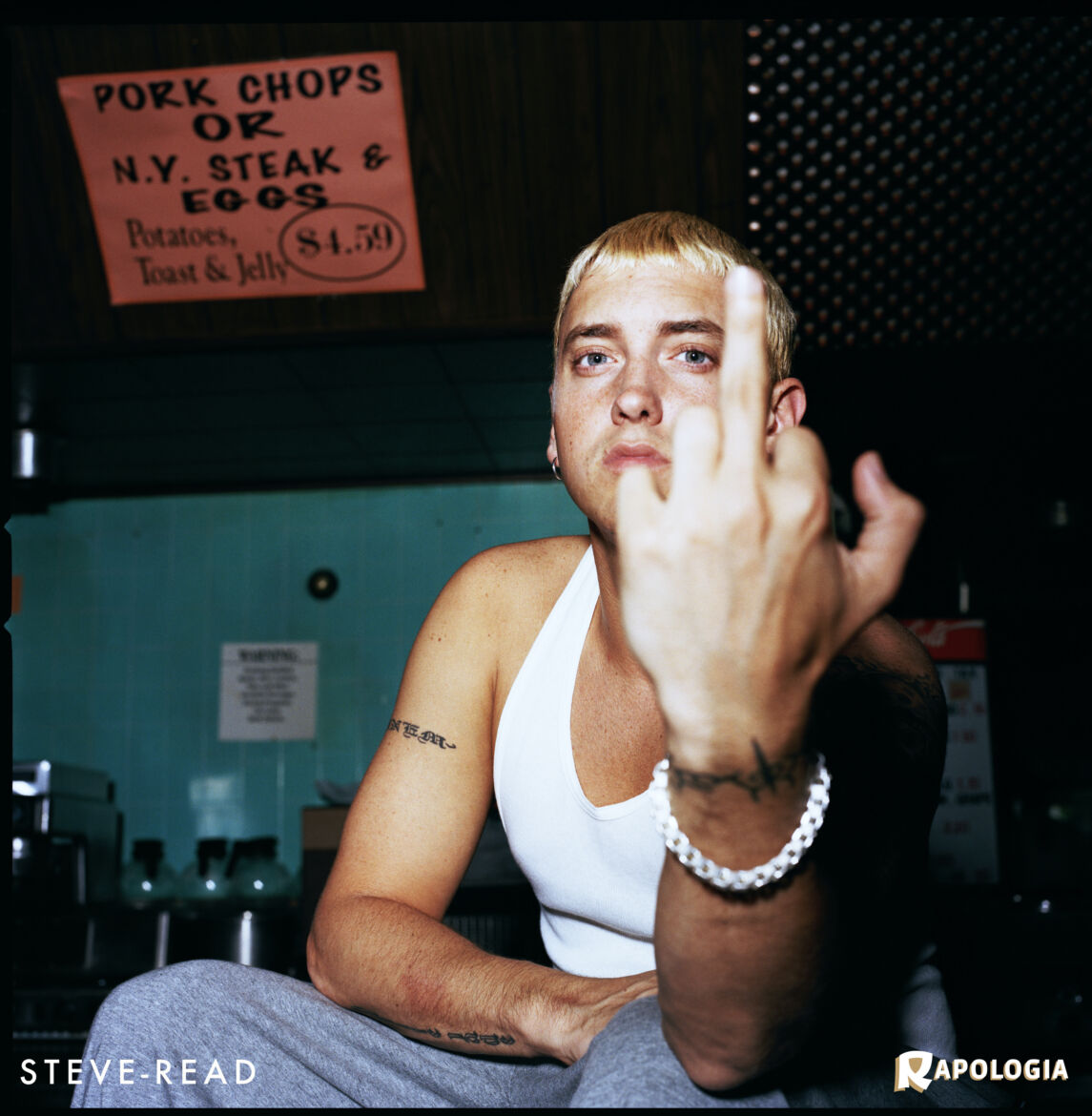
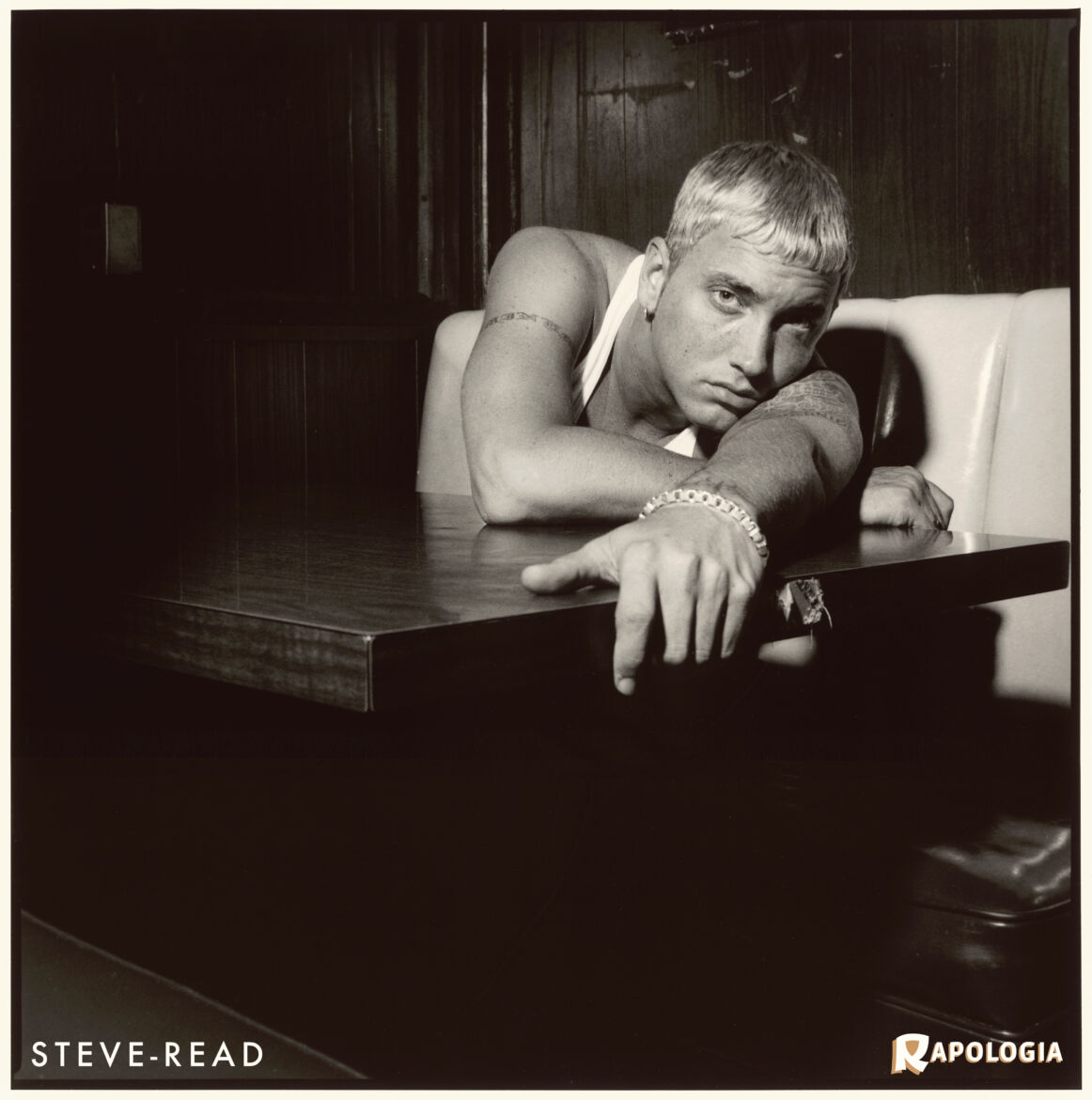
«Considera che non lo conoscevo molto bene. Mi era piaciuto parecchio il suo primo progetto per Interscope, The Slim Shady LP, ed ero consapevole della magnitudine di My Names Is, ma dal punto di vista umano non sapevo davvero chi fosse. Quando lavorai con lui nel 1999 pensavo che quello fosse semplicemente il suo stile ma come hai detto, non era ancora così affermato, lo sarebbe diventato solo in seguito… Sono stato fortunato a trovarmi lì in quel momento, quando stava evolvendo come artista, e le mie foto lo testimoniano chiaramente. Già dal primo istante pensai che fosse fantastico: chiunque con quell’attitudine e quel look era perfetto per la mia camera. Rimasi poco più di 15 minuti con lui quella mattina al Johnie’s Coffee Shop a Los Angeles e scattati quelle foto su pellicola. Le esporrò anche alla mia mostra, iniziata lo scorso 18 agosto.»
La mostra di Steve Read inaugurata lo scorso 18 agosto a Edimburgo, porta il titolo SHOOTING STARS PAYS THE RENT, una scelta personale e al tempo stesso un gioco di parole legato al fatto che anche Steve in quegli anni puntava alle stelle nella sua carriera.
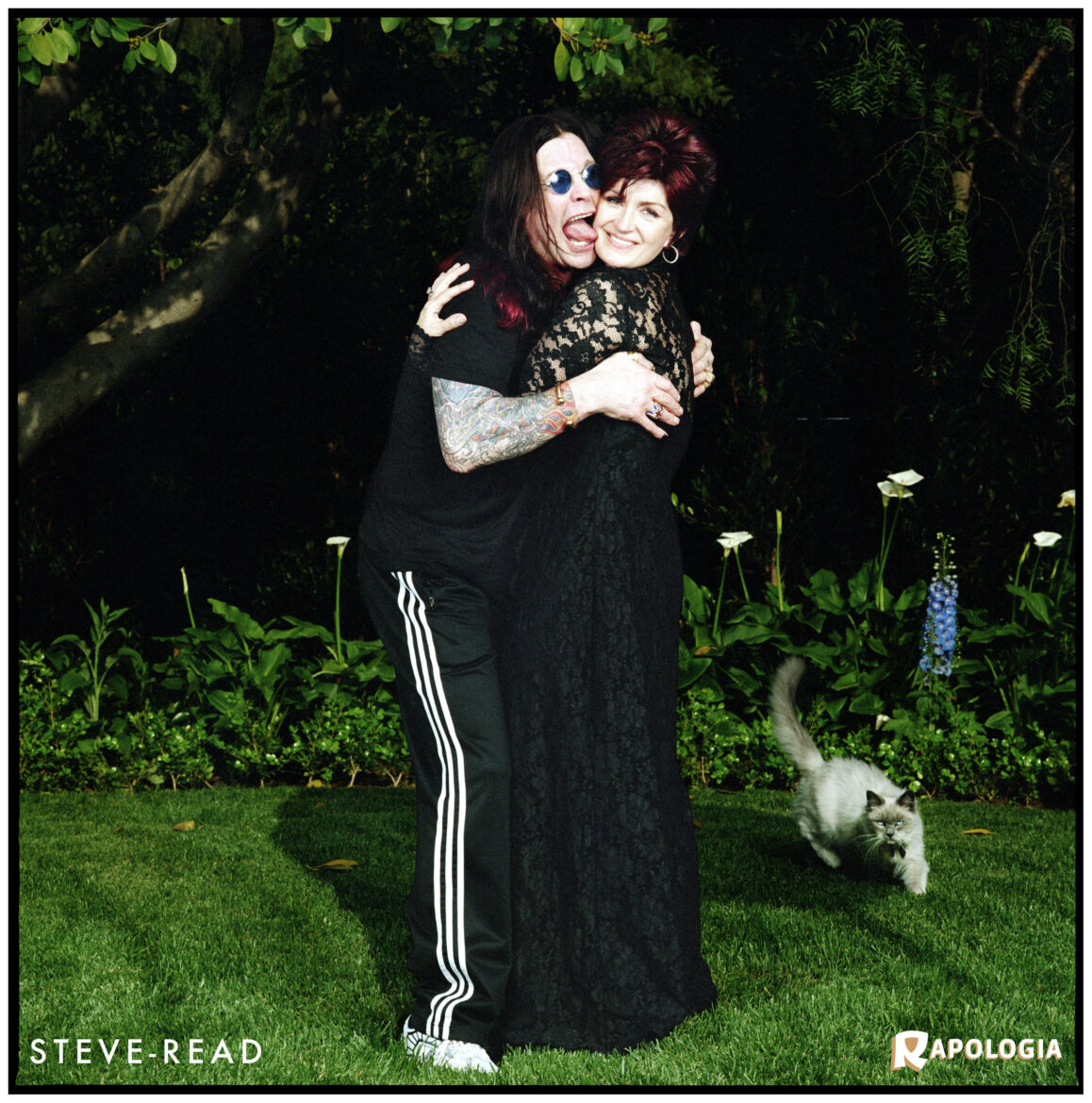
Fino al 19 novembre sarà possibile ammirare ed acquistare rari scatti di Eminem, Alanis Morissette, Ozzy e Sharon Osbourne, JK Rowling e tanti altri.
Come sei finito a fotografare Eminem nello stesso giorno in studio di registrazione?
«Erano circa le 11 del mattino quando stavo scattando al Johnie’s Coffee Shop e avevo notato che c’era qualcosa che non andava. Era nervoso dato che aveva appena perso il suo libro di rime. So che c’è un’altra storia riguardo questo, ma a quanto pare era una cosa comune per lui all’epoca, ahah…»
C’è qualcosa che ti ha colpito in particolare di lui?
«La drastica differenza tra lui e quelle che erano le superstar rap degli anni ’90. Personalmente avevo già lavorato con Master P e, come ben saprai, il distacco è ampio. Eminem era tranquillo, lontano dai riflettori…molto diverso da tutti gli altri. Così quella sera decidemmo di proseguire il servizio fotografico mentre lui lavorava al Record Plant Studios. Pare che avesse ritrovato il suo libro di rime e ricordo che appena entrati nello studio, mi colpì subito una cosa piuttosto insolita per un rapper a quei tempi: Thank You di Dido era in loop in sottofondo. Considerando le mie origini inglesi mi sorprese non poco, ma oggi ovviamente ha tutto senso. Qualche giorno fa ho condiviso uno scatto inedito di quel momento sul mio account Instagram.»
Visualizza questo post su Instagram
Era da poco passata l’estate del 1999 ed Eminem era in un continuo via vai di tour e promo tra Stati Uniti ed Europa. La scrittura per The Marshall Mathers LP doveva essere mirata ed efficace, l’artista di Detroit si stava allontanando da quella voce nasale che aveva svelato con l’EP del 97 e modellato quello stesso anno con The Slim Shady LP per spingersi verso territori creativi inediti…
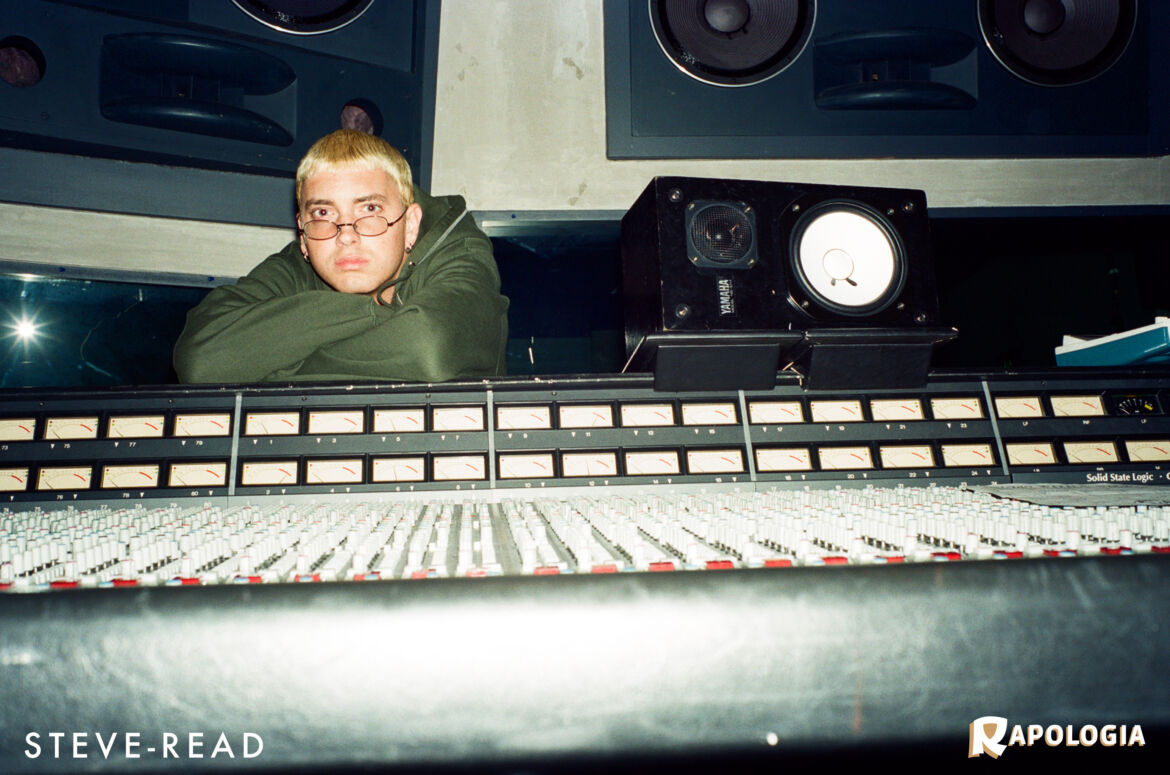
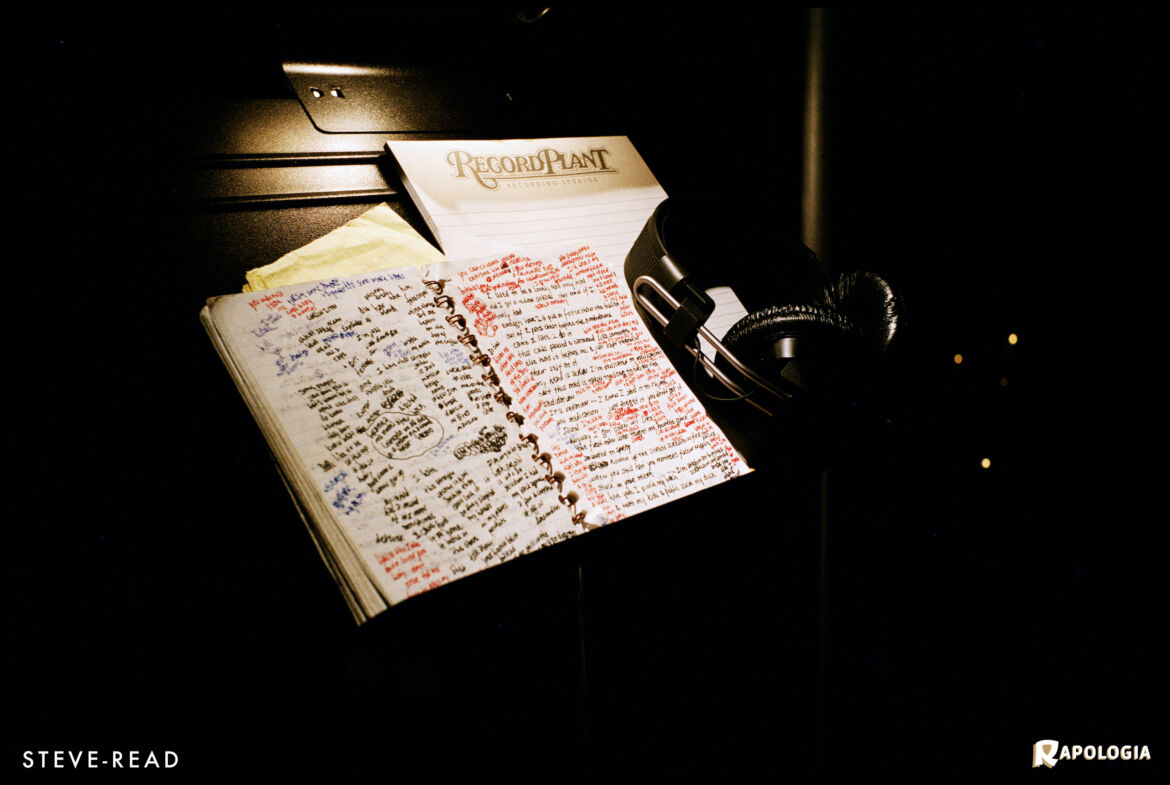
«Stava lavorando a Stan, non ricordo esattamente a quale strofa in particolare, ma lo studio era molto buio. Per un fotografo all’epoca, era una sfida non da poco riuscire a ottenere degli scatti efficaci in quelle condizioni; gli chiesi quindi se potevo catturare alcuni momenti nella cabina di registrazione. Quella sera, oltre a Stan, stavano finalizzando anche If I Got Locked Up e riuscii a catturare uno scatto del suo famigerato libro di rime, si può vedere chiaramente la sua strofa. Era evidentemente in un momento super produttivo: se guardi quella foto, ci sono rime in ogni angolo del foglio, una scrittura super sottile, ogni singolo spazio e colore veniva usato. Che follia! Se guardi i testi di John Lennon, per quanto brillanti, sono comunque caratterizzati da una scrittura regolare ed ordinata. Em invece all’epoca sembrava non avere neanche un millisecondo di distanza tra quello che gli veniva in mente e quello che metteva su carta. Trovai tutto estremamente affascinante ed è per questo che decisi di realizzare quello scatto in particolare.»
Se ci pensi, per la nostra generazione è come se avessi fotografato Paul McCartney mentre registrava Yesterday.
«Sono d’accordo, e lo dico da grande fan.»
Ricordi se ci fosse qualcun altro con lui quel giorno?
«Cavolo, avrei voluto prendere più note, considerando cosa stava succedendo, ma ricordo che ci fosse Dr. Dre con il suo entourage nel parcheggio dello studio.»
Ci sono altri rapper che ricordi di aver fotografato?
«Cypress Hill, Tinie Tempah e ho avuto un incontro davvero particolare con 50 Cent nel 2009.»
Ah! Ho letto qualcosa riguardo a un incidente tra te e lui, ma non sono sicuro della fonte quindi mi stavo astenendo dal chiedertelo.
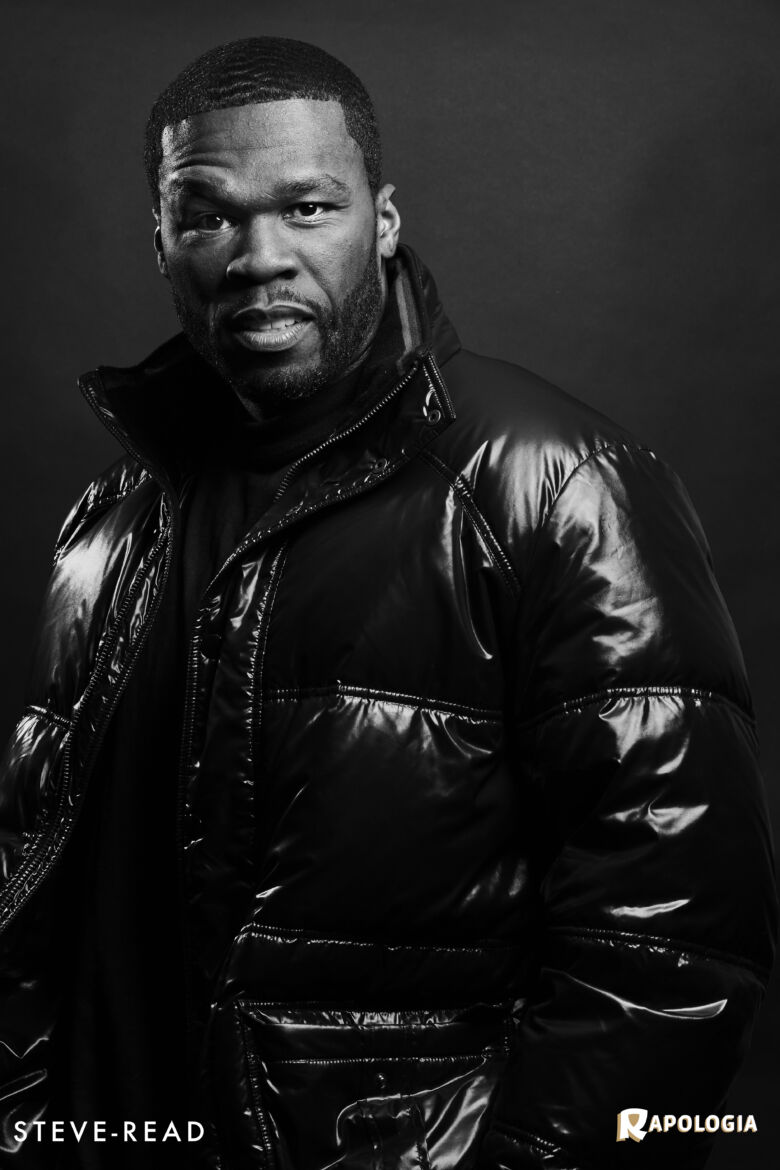
«No, è tutto vero, te lo racconto subito. 50 era con Rio Ferdinand che all’epoca aveva questo magazine digitale #5. Ero in un prestigioso hotel di Londra con altre personalità mediatiche, ed abbiamo atteso circa 7 ore che 50 Cent arrivasse e facesse la sua comparsa per un’intervista con Rio. Quando finalmente arrivò il mio turno per scattare, 50 era affiancato da due grossi bodyguard e indossava una semplice t-shirt nera con una giacca puffer di Prada. Ricordo che uno dei suoi uomini fece un segnale, un 4 con la mano, e sapevo da un amico che aveva fotografato Tiger Woods che quello indicava il numero massimo di scatti che mi era consentito. Così, col primo scatto controllai le luci, e al secondo mi accorsi che uno dei colletti della giacca era piegato, così mi ci avvicinai per indicarglielo e provai a mostrargli la piega. Mi dissero subito di farmi indietro, ma notai che lo stesso 50 si era innervosito e mi diede un pugno dritto nello stomaco. Fu pazzesco: persi il terzo scatto, dato che mi era partito in automatico inquadrando il pavimento. Dopo quel gesto, 50 tornò al suo posto con aria soddisfatta e dopo essermi ripreso lo fotografai una quarta e per ultima volta, ottenendo lo scatto desiderato.»
Che follia.
«Già, ancora oggi racconto quella storia ahah!»
Steve grazie infinite per il tuo tempo e buon fortuna con la mostra!
«Grazie a te!»
Così, con una breve conversazione, ci si rende conto di come il potere della fotografia possa catturare l’aspetto umano di un soggetto anche nelle fasi più caotiche della vita. Quel giorno Eminem veniva immortalato nell’occhio del ciclone: una figura fragile e potente, destinata di lì a poco a riversare e ricevere l’energia necessaria a consacrarsi come uno dei più grandi artisti del nostro tempo.
EMINEM REGISTRA STAN: LO SCATTO ESCLUSIVO PER RAPOLOGIA
Siamo lieti di presentarvi in esclusiva uno scatto che Steve Read ci ha dato l’onore e il permesso di condividere per la prima volta qui su Rapologia.
Quel giorno, Steve ha catturato Marshall Mathers nella calma della sua creatività. Con Stan, Eminem ha dato voce e teatro alla psiche di chi si rifugia in relazioni unilaterali, fino a sfociare nell’ossessione pura.
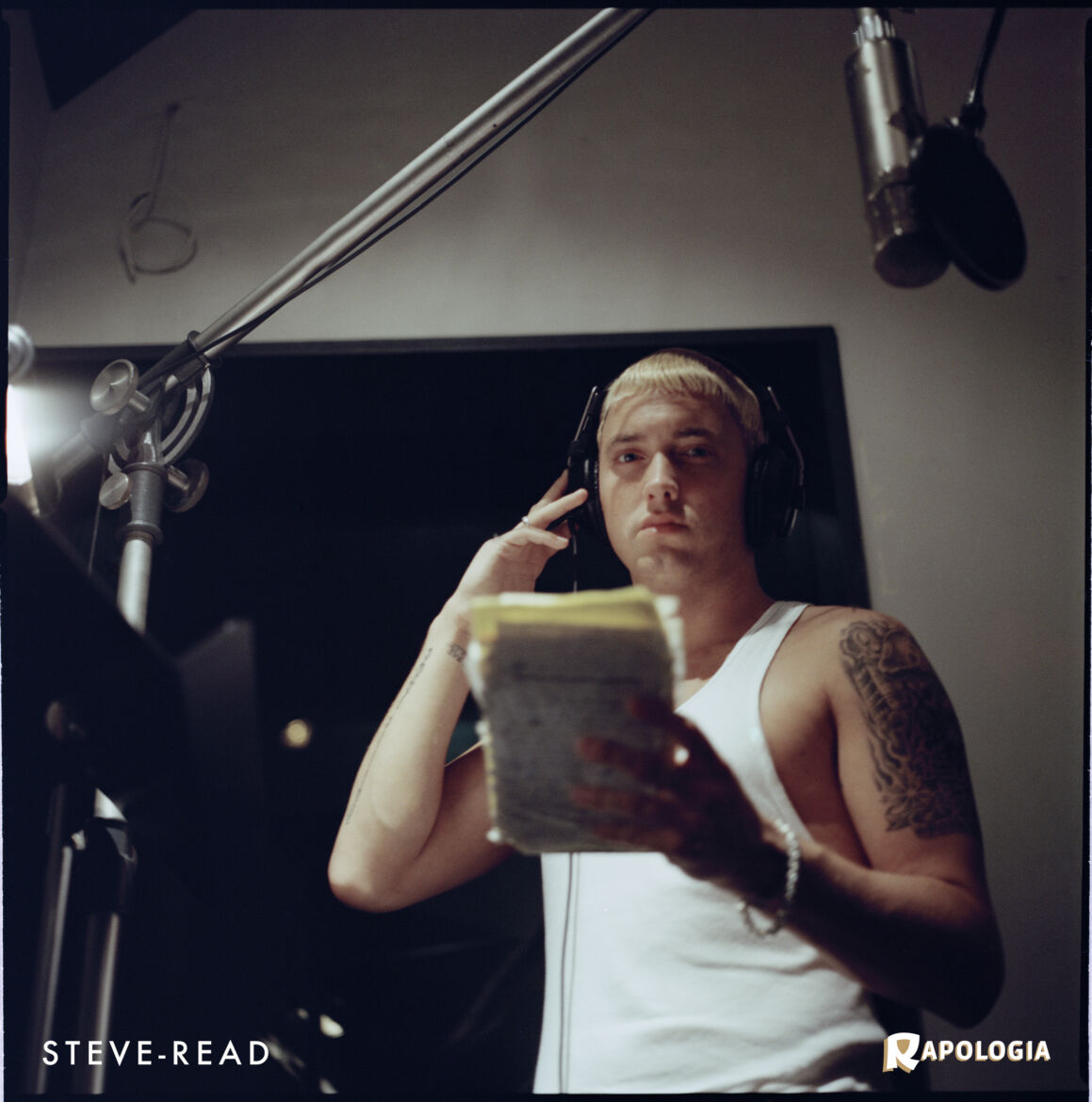
Allo stesso tempo, la voce di Dido riecheggia dissociata dalla sua fonte originaria, a dimostrazione di come il potere della musica possa trasformare anche la giornata più tempestosa in speranza.
Alcune delle opere di Steve Read sono disponibili all’acquisto presso il suo store ufficiale: www.stevereadprints.com
Segui Steve Read su Instagram cliccando QUI.
Scatto esclusivo concesso da Steve Read. Fotografia d’archivio condivisa in anteprima con Rapologia, immagine inedita di Eminem per gentile concessione di Steve Read
• ORIGINAL VERSION •
MUSIC THROUGH THE LENS: INTERVIEW WITH STEVE READ
Whether it’s an album cover or a snapshot of our favorite artist, photography and music have more in common than one might think. Both exist to immortalize the expressive moment of emotions, a shared denominator that creates a powerful connection between seeing and listening.
Our conversation with Steve Read was born out of this very idea; a creative director who dreamed of shooting stars while chasing his own in Los Angeles.
STEVE READ SHOOTS EMINEM IN THE EYE OF THE STORM
His journey began in England, right in the middle of the Britpop phenomenon, from the iconic magazine Loaded to the U.S., working under the legendary Tina Brown. Steve has captured the personalities of numerous legends, from our very own Pavarotti to Ozzy Osbourne, from Master P to an unusual and intense encounter with 50 Cent, which we will get to in a moment.
But our conversation with Steve revealed an epic and unexpected surprise. As we anticipated in our special feature on Stan, Read photographed extraordinary moments of Marshall Mathers in the studio while recording his legendary single. One of those photos had never before been seen by the public, until now. But first, our conversation with Steve Read.
How did you first get into photography?
«Originally I was the art director at Loaded magazine, commissioning photographers and sending them all over the world to shoot people and events. Since I was a kid, photography had always been my main passion, so at some point I started commissioning those assignments for myself. That kind of work led me to meet Tina Brown, one of the true legends of the magazine world.»
Did the move to the U.S. happen right after that?
Yes. I remember the launch party for Talk magazine at the Statue of Liberty. At that event I met every kind of artist and actor, from Robert De Niro to Lionel Richie… Meeting Tina opened up an even bigger and more prestigious world for me.
Speaking with Steve, it becomes clear that his aim is not simply to honor the subjects of his photos, but to humanize them as much as possible, a task that can be incredibly difficult when you only have a very limited window of time.
Do you prefer photographing musicians or actors?
«I don’t really see them as one or the other, I just see them as people. What they do for a living is secondary to me. Often in this work you get maybe 10–15 minutes with someone, and my job is to use that time to get to know them, put them at ease, and let them open up as human beings, whether it’s Ray Liotta or Eminem, rather than just treating it as another day at work.»
It’s hard not to think of Marshall Mathers; in the early years of his career, his look and his persona kept evolving from album to album.
Maybe for musicians it’s a bit different since they go through their so-called “eras”?
«Yes, exactly. A great example would be Dave Berry, who became a different person with each album, or Thom Yorke. The thing is, many of them fully become that “new” person, so they bring that transformation into every photoshoot or artwork…»
Some of the most iconic images of Eminem from the early 2000s show him in his classic white tank top, bleached hair, and Nike Airs under long sweatpants. On September 20, 1999, Steve Read was among the lucky few to witness the transformation of someone who was already becoming one of the greatest icons of the new millennium.
Your photoshoot with Eminem was prophetic, you managed to capture the aesthetic that, just a year later, would dominate the world.
«At the time I didn’t know him very well. I really liked his first project for Interscope, The Slim Shady LP, and of course I was aware of the impact of My Name Is, but on a human level I really didn’t know who he was. When I worked with him in 1999, I thought that was just his style, but as you said, he wasn’t yet fully established; that would come later. I was just lucky enough to be there at that moment when he was evolving as an artist, and my photos bear witness to that. From the very first moment I thought he was fantastic, anyone with that kind of attitude and look was perfect for my camera. I spent a little more than 15 minutes with him that morning at Johnie’s Coffee Shop in Los Angeles and shot those photos on film. I will also be exhibiting them in my show, which opened this past August 18.»
Steve Read’s exhibition, inaugurated on August 18 in Edinburgh, is titled SHOOTING STARS PAYS THE RENT, a personal choice and a play on words, hinting at the fact that Steve himself was also reaching for the stars in his career at that time.
Until November 19, it will be possible to admire and purchase rare shots of Eminem, Alanis Morissette, Ozzy and Sharon Osbourne, J.K. Rowling, and many others.
How did you end up photographing Eminem in the studio that very same day?
«It was around 11 a.m. while I was shooting at Johnie’s Coffee Shop, and I noticed something was off. He was nervous because he had just lost his rhyme book. I know there is another story floating around about this, but apparently it was a pretty common thing for him back then, haha…»
Was there something in particular that struck you about him?
«The drastic difference between him and the rap superstars of the ’90s. I had already worked with Master P, and as you know, the contrast was huge. Eminem was calm, low-key, far from the spotlight… very different from the others.
So that evening we decided to continue the photoshoot while he was working at Record Plant Studios. Apparently he had found his rhyme book, and I remember as soon as we walked into the studio I noticed something unusual for a rapper at that time: Dido’s Thank You was playing on loop in the background. Considering my English roots, it surprised me quite a bit, but of course today it all makes sense.
A few days ago I shared an unreleased shot from that moment on my Instagram.»
Visualizza questo post su Instagram
It was just past the summer of 1999, and Eminem was in a constant whirlwind of touring and promotion across the U.S. and Europe. Writing for The Marshall Mathers LP had to be sharp and effective; the Detroit artist was moving away from that nasal voice he had revealed with the ’97 EP and refined the following year with The Slim Shady LP, pushing himself into uncharted creative territory…
«He was working on Stan, I don’t recall exactly which verse in particular, but the studio was very dark. For a photographer at the time, it was no small challenge to get effective shots in those conditions. So I asked if I could capture a few moments in the recording booth. That evening, along with Stan, they were also finalizing If I Got Locked Up, and I managed to capture a shot of his infamous rhyme book, you can clearly see his verse on the page. He was clearly in a super-productive phase. If you look at that photo, there are rhymes crammed into every corner of the sheet, written in tiny script, every single space and color used. Insane! If you look at John Lennon’s lyric sheets, brilliant as they may be, they are still fairly regular and organized. But with Em at that time, it was as if there wasn’t even a millisecond between what came into his head and what came out on paper. I found that absolutely fascinating, and that’s why I decided to take that particular shot.»
If you think about it, for our generation it’s like having photographed Paul McCartney while he was recording Yesterday.
«I couldn’t agree more, and I say that as a huge fan.»
Do you remember if anyone else was with him that day?
«Man, I wish I had taken more notes considering what was going on, but I do remember Dr. Dre being there with his entourage in the studio parking lot.»
Are there any other rappers you recall photographing?
«Cypress Hill, Tinie Tempah, and I had a very unusual encounter with 50 Cent in 2009.»
Ah! I read something about an incident between you and him, but I was not sure of the source so I held back from asking.
«No, it’s all true, I’ll tell you right now.»
«50 was with Rio Ferdinand, who at the time had this digital magazine called #5. We were at a prestigious London hotel with other media personalities, and we waited about seven hours for 50 to arrive and make his appearance for an interview with Rio.
When it finally came time for me to shoot, 50 was surrounded by two huge bodyguards, wearing just a simple black t-shirt with a Prada puffer jacket. I remember one of his men giving a signal, a “4” with his hand, and I knew from a friend who had photographed Tiger Woods that this meant the maximum number of shots I was allowed to take.
So, with the first shot I checked the lighting, and by the second I noticed one of the jacket collars was folded. I stepped in to point it out and tried to show him the crease. Immediately they told me to back off, but I saw that 50 himself was irritated, and he punched me straight in the stomach. It was insane: I lost the third shot because the camera fired automatically, capturing just the floor.
After that, 50 went back to his spot looking satisfied, and once I had caught my breath I took a fourth and final shot, and that’s the one I wanted.»
That’s wild.
«Yeah, it’s still a story I tell to this day, haha!»
Steve, thank you so much for your time and best of luck with the exhibition!
«Thank you!»
So, with just a short conversation, you realize how photography has the power to capture the human side of a subject even in the most chaotic phases of life. That day, Eminem was caught in the eye of the storm: fragile yet powerful, on the verge of channeling and receiving the energy that would soon consecrate him as one of the greatest artists of our time.
EMINEM RECORDS STAN: THE EXCLUSIVE SHOT FOR RAPOLOGIA
We are proud to present, as a world exclusive, a photo that Steve Read has given us the honor and permission to share here for the very first time on rapologia.it. That day, Steve captured Marshall Mathers in the calm of his creativity. With Stan, Eminem gave voice and stage to the psyche of those who retreat into one-sided relationships, spiraling into pure obsession.
At the same time, Dido’s voice echoed, detached from its original source, showing how the power of music can transform even the stormiest of days into hope.
Some of Steve Read’s best works can be purchase now on his official store: https://www.stevereadprints.com/
Shooting Stars Pays The Rent – An Exhibition of Photographs by Steve Read begins an Artist in Residency at Kimpton Charlotte Square hotel, Edinburgh from 18th August to 19th November, before continuing its journey across the UK.
Follow Steve Read HERE.
Exclusive photograph courtesy of Steve Read. Archival photograph shared in preview with Rapologia, unreleased image of Eminem courtesy of Steve Read.